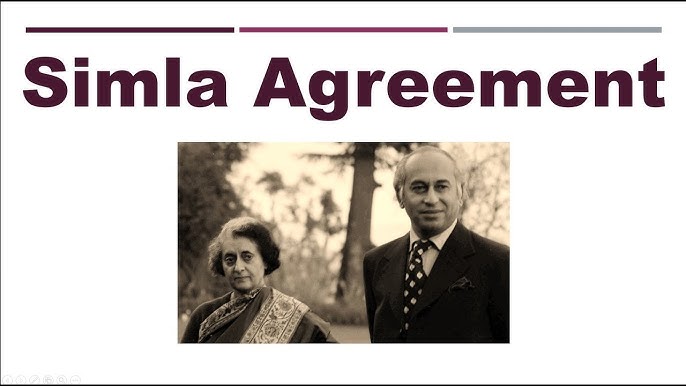
In a move that could reshape regional dynamics, Pakistan has officially announced the suspension of the Simla Agreement, a cornerstone of its diplomatic ties with India since 1972. This historic accord, signed by then-Prime Minister Zulfikar Ali Bhutto and Indian Prime Minister Indira Gandhi after the 1971 war, aimed to lay the groundwork for peaceful resolution of disputes — particularly Kashmir — through bilateral talks.
What Was the Simla Agreement?
The Simla Agreement emphasized:
-
Mutual respect for each country’s sovereignty and territorial integrity.
-
Peaceful resolution of conflicts through dialogue.
-
A commitment to refraining from the use of force against each other.
The agreement specifically stated that both countries would settle their differences bilaterally, without third-party intervention — a principle India has often cited to oppose international mediation on Kashmir.
Why Has Pakistan Suspended It?
Pakistan’s decision to suspend the agreement appears rooted in growing frustration over:
-
India’s revocation of Article 370 in 2019, which granted special status to Jammu and Kashmir.
-
Lack of progress in peace talks.
-
Heightened tensions across the Line of Control (LoC).
-
The perception that bilateral mechanisms have failed to address Pakistan’s concerns, especially regarding Kashmir.
Officials in Islamabad argue that India’s actions have undermined the spirit and letter of the Simla Agreement, forcing Pakistan to reconsider its commitments.
Potential Consequences
Suspending the Simla Agreement could have wide-reaching implications:
-
Internationalization of Kashmir: Pakistan may seek greater international mediation and support, opening the Kashmir issue once again at global forums like the United Nations.
-
Increased Diplomatic Strains: Already tense relations between New Delhi and Islamabad could further deteriorate.
-
Risk of Escalation: Without the framework of the Simla Agreement, the risk of miscommunication and military confrontation may rise.